In January, a colossal iceberg—about the size of Chicago—broke off from one of Antarctica’s floating ice shelves, prompting nearby scientists to rapidly shift their focus to explore the newly uncovered seafloor.
What they found went far beyond their expectations.
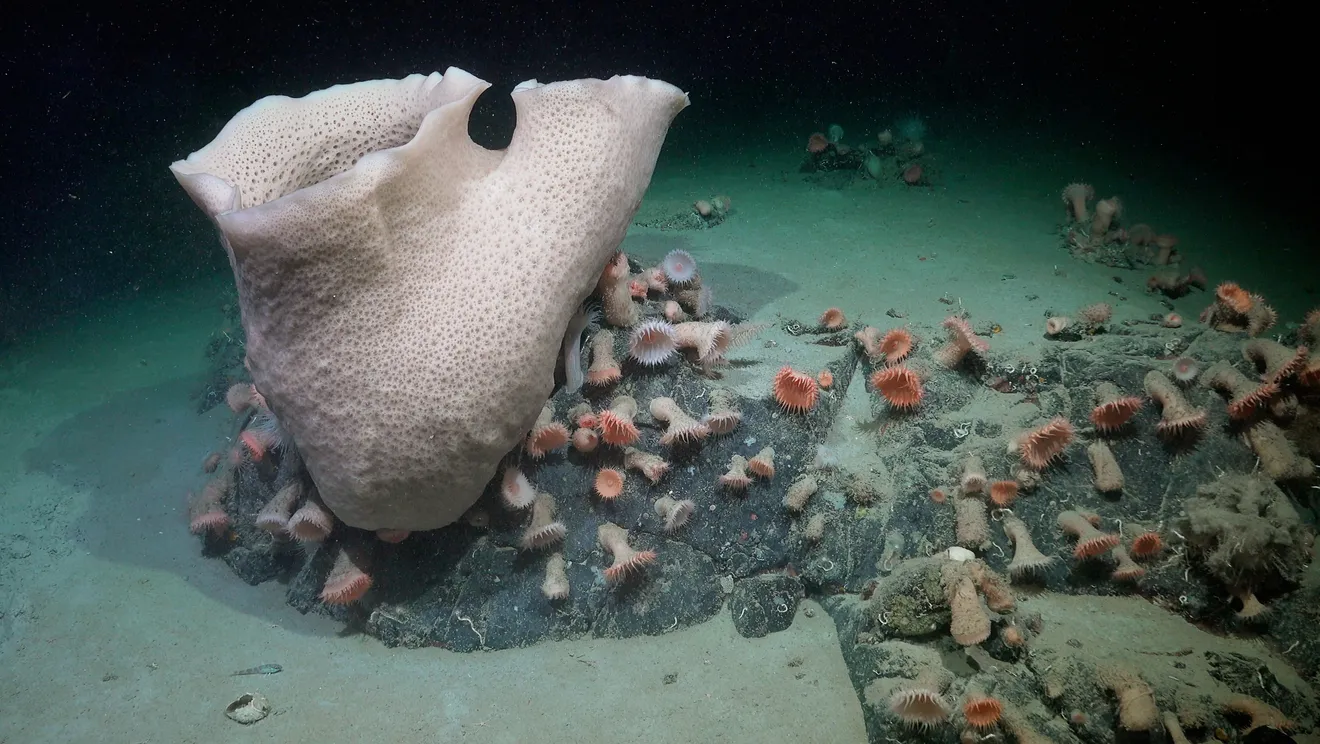
“We were amazed to discover such a lively and mature ecosystem. Judging by the size of the organisms, these communities might have been thriving for decades or even centuries,” said Patricia Esquete from the University of Aveiro in Portugal.
Esquete was part of an international team from the Schmidt Ocean Institute conducting research in the Bellingshausen Sea. After hearing that iceberg A-84 had calved, the team quickly altered their plans to investigate a seafloor that had been buried beneath nearly 500 feet of ice for centuries.
Within two weeks, they arrived and used autonomous underwater gliders to scan the seabed. They uncovered a thriving ecosystem that had managed to survive in total darkness with scarce nutrients.
“We changed our mission on the spot to seize this rare opportunity,” Esquete said.
Douglas McCauley, a marine science professor at UC Santa Barbara, applauded the team’s adaptability. “Some of the most incredible discoveries happen when scientists are willing to throw the plan out the window and say, ‘A giant iceberg just broke off—let’s explore!’”
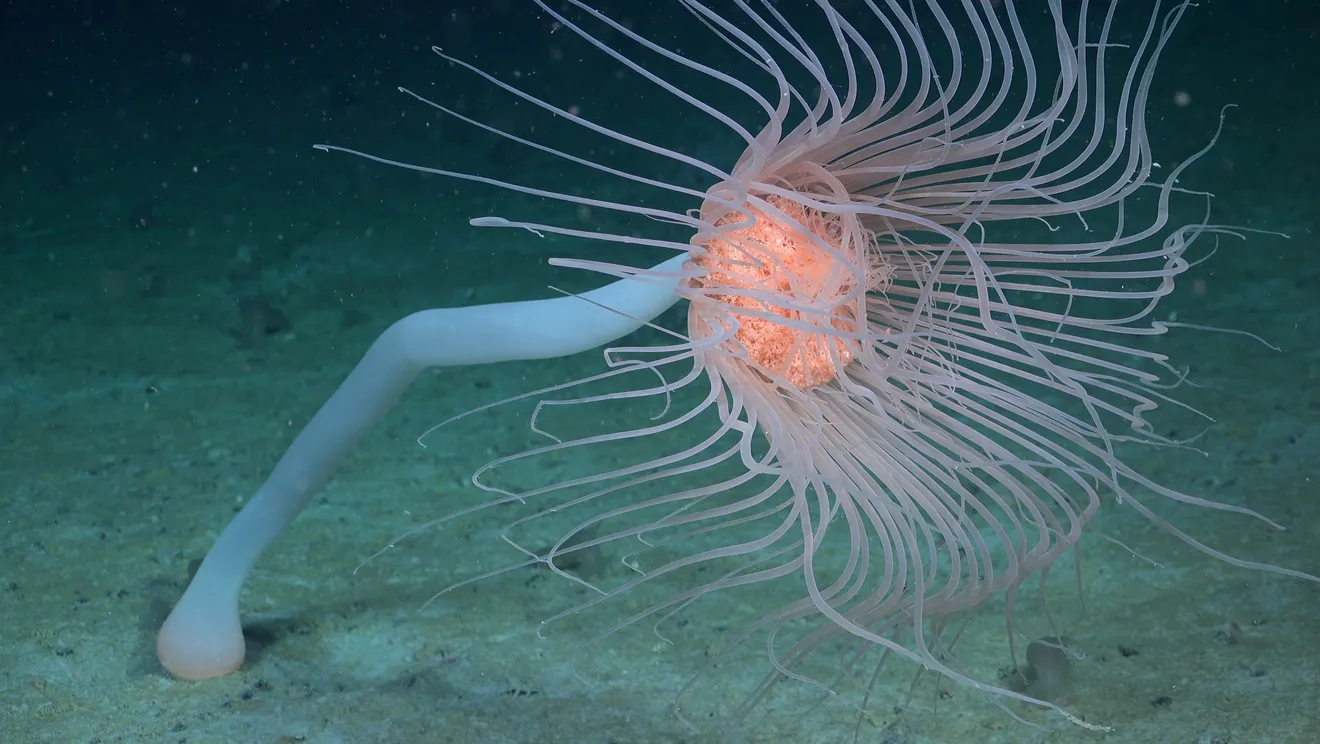
Their sudden detour aboard the research vessel R/V Falkor (Too) led to groundbreaking discoveries in waters as deep as 4,200 feet. The team encountered a variety of marine species, including icefish, octopuses, corals, sponges, and giant sea spiders—some potentially unknown to science. But confirming new species will take time.
Andrew Thurber, a polar research expert and professor at UC Santa Barbara, noted that such discoveries are exceptionally rare. While remotely operated vehicles (ROVs) offer help, navigating beneath thick ice remains a major challenge.
“It’s not as easy as sending a robot under the ice and pulling it back with perfect data,” he said. “These missions are risky, and if something goes wrong, retrieval can be impossible.”
A Mystery: How Life Survives Without Light
A key puzzle is how this diverse marine life survived without sunlight. Given the depth and ice coverage, access to nutrients from the surface is extremely limited.
“These organisms are completely cut off from sunlight, which is a critical energy source for most ecosystems,” Thurber said.
In the deep ocean, many species rely on "marine snow"—a slow fall of organic debris like dead animals, feces, and plant matter. But after centuries under ice, even that would be minimal, making the ecosystem’s richness and large organisms all the more surprising.
“We expected something similar to deep-sea life—mostly tiny, varied creatures with only occasional large ones,” said Thurber. “But we found large invertebrates, which is very unexpected.”
Scientists believe deep currents may help deliver nutrients beneath the ice, though how this works is still uncertain.
Where Did A-84 Come From?
Iceberg A-84 broke off from the George VI Ice Shelf, a massive glacier attached to the Antarctic Peninsula. These ice shelves play a crucial role in stabilizing Earth’s polar regions.
The event adds to growing evidence of rapid environmental changes in the polar zones caused by climate change. As the ice continues to retreat, scientists are questioning what should be done with the ecosystems revealed in its wake.
“Some may see these seafloors as potential industrial zones, but they contain delicate and unique ecosystems—filled with untapped biodiversity, possible medical applications, and long-living species highly sensitive to disruption,” said Thurber.
The question of whether to protect or exploit these regions is becoming more urgent.
“As caretakers of Antarctica, we must think carefully about how we manage these emerging environments in a warming world,” he added.
What’s Next?
A major concern now is whether these once ice-shielded ecosystems can survive without their frozen cover.
“Some species can move to new areas,” said Jyotika Virmani, Executive Director of the Schmidt Ocean Institute. “But others are anchored to the seafloor—they’re stuck.”
Only future research trips—months or years down the line—will reveal how these organisms adapt to the sudden environmental changes.
Even so, this rare glimpse into a hidden marine world is a priceless opportunity for scientific discovery.