A new expedition ship is taking shape far from the European yards that build much of the world’s polar fleet, with the metallic noise of construction still hanging over the ASENAV yard in Valdivia, Chile. Magellan Discoverer is nearing completion there, with Punta Arenas expected to receive the vessel on October 25. The 96-passenger ship is scheduled for a naming ceremony in November, followed by its first operations in Antarctica in December.
Those milestones matter because polar ships operate inside narrow seasonal windows, where construction delays can quickly collide with booked departures, aircraft arrangements and expedition staffing. A previously announced September 30 delivery date had not been publicly confirmed at the time of reporting, leaving a small but significant question over the exact handover timetable.
Table of content
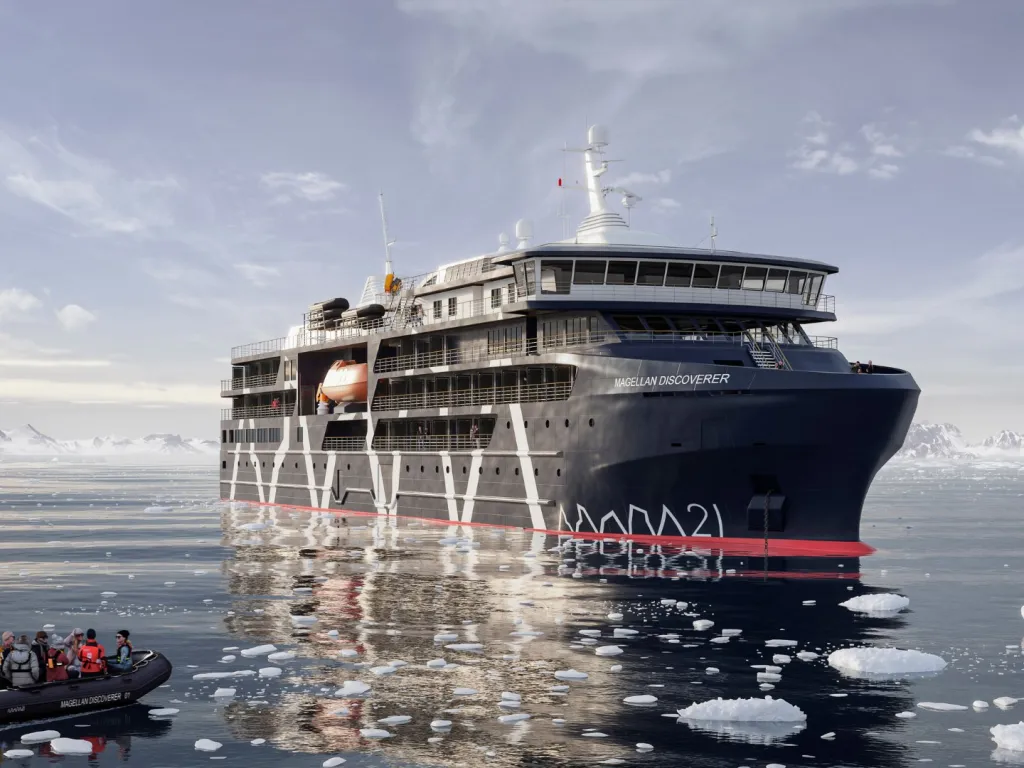
The ship is a sister vessel to Magellan Explorer, launched in 2019. Magellan Discoverer measures 94 metres in length and can accommodate up to 88 passengers on Antarctic fly-cruises, rising to 96 on conventional sea voyages. A complement of 67 crew members and expedition staff is substantial for a vessel of this passenger capacity, reflecting the labour involved in operating in cold water, handling landings and managing expedition logistics.
Space on a polar ship is never quite as abstract as deck plans make it appear: wet outerwear has a smell, boots need somewhere to drain, and people returning from a landing bring cold air and damp equipment through the doors. The practical test will be how efficiently those spaces work when nearly everyone wants to change layers, warm their hands and get inside at once.
A Small Ship Built for Ice-Edge Operations
Magellan Discoverer carries a PC6 polar classification, indicating an ice-strengthened design intended for operations in polar conditions within the limits of that class. That does not make it an icebreaker, a distinction worth keeping clear when expedition-cruise descriptions drift into loose language about ice capability.
The ship’s reported open-water cruising speed is 14 knots, or about 26 kilometres per hour, useful when itineraries must balance sailing distances against landing windows and weather. Around Antarctica, speed on paper is only one part of the equation because wind, swell, sea ice and visibility can interfere with carefully arranged plans. Engines may hum steadily through the night while the actual itinerary remains subject to conditions outside the bridge windows.
The passenger numbers also put Magellan Discoverer firmly in the small-ship end of Antarctic cruising rather than the larger expedition-vessel category. Smaller numbers can matter ashore, where operations depend on Zodiac transfers, landing-site conditions and the expedition team’s ability to move people safely without turning every disembarkation into a prolonged queue.
Yet a 96-passenger capacity does not eliminate waiting, and Antarctica is particularly good at exposing the fiction that every minute of a trip can be scheduled. Wind can stop a landing, wildlife can be somewhere other than expected, and ice can close an intended approach. The soundtrack may alternate between outboard motors, radio calls and long stretches of near silence, while passengers stand around in insulated clothing waiting for a decision.
What the Hybrid-Electric System Actually Means
The most technically significant feature aboard Magellan Discoverer is its propulsion arrangement, which combines two 1,800 kW diesel engines with batteries, an ABB DC electrical grid and Azipod propulsion. The hybrid-electric configuration is designed to improve energy efficiency, lower underwater noise and permit limited periods of operation using battery power.
That last point deserves precision because hybrid-electric does not mean the vessel operates without fossil fuel throughout a voyage. Diesel engines remain part of the system, and independently verified fuel-consumption figures or comparative emissions data per passenger-night have not been publicly released. The quieter periods may prove particularly noticeable aboard ship, where vibration and the constant low-frequency throb of machinery can otherwise be felt through floors and furniture as much as heard.
Magellan Discoverer has been described as the first hybrid-electric polar expedition cruise ship built in the Americas. The description concerns both the location of construction and the ship’s propulsion architecture, rather than suggesting emissions-free Antarctic travel.
That distinction matters in a sector where environmental language can move faster than independently comparable performance data. Heat-recovery equipment is also incorporated into the vessel, allowing energy that might otherwise be wasted to be put to further use, while Tier III emissions controls address regulated pollutants from marine engines. These systems may reduce particular impacts, but passengers will still be travelling aboard an energy-intensive vessel operating in a remote environment where fuel, food, equipment and waste all carry logistical consequences.
Science Space Alongside Passenger Comfort
Magellan Discoverer will include both wet and dry science laboratories, an increasingly visible feature aboard expedition vessels that can support research work when suitable programmes and personnel are aboard.
A wet laboratory allows samples or equipment exposed to seawater and field conditions to be handled without bringing salt, moisture and the sharp smell of marine material into cleaner workspaces. Dry laboratories provide a more controlled setting for instruments, computers and other tasks that do not mix well with dripping clothing.
The existence of laboratory space should not automatically be read as proof of a specific scientific output, however; its value depends on how the facilities are used and which projects sail with the ship. In practical terms, dedicated rooms at least give researchers a place to work without competing with passenger lounges or improvised tables.
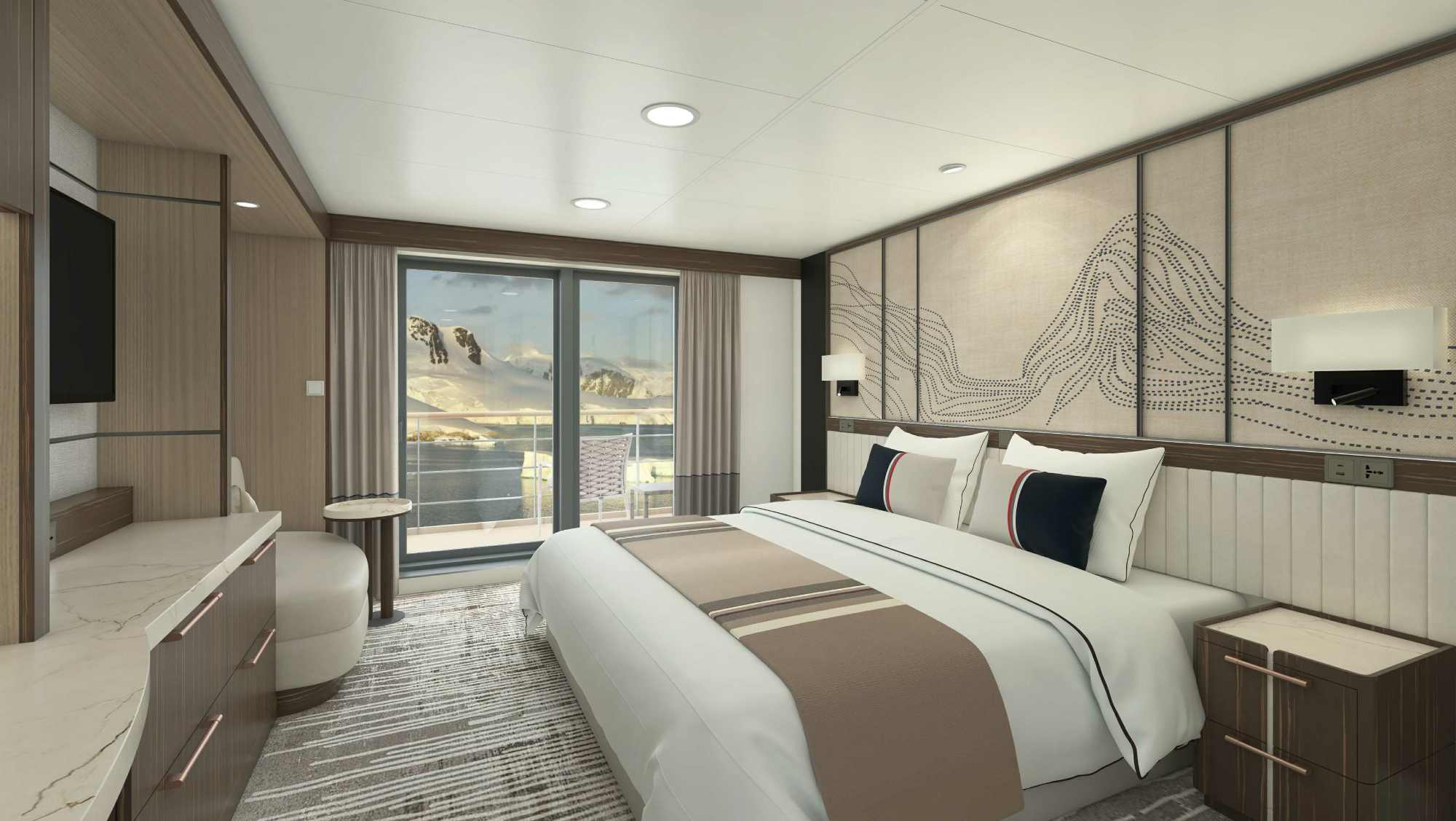
Passenger accommodation, meanwhile, will include private balconies, a feature that signals how expectations aboard modern expedition ships have shifted from purely functional cabins toward greater personal space.
A balcony can be useful in Antarctica, although the cold quickly corrects any idea of lingering outside in light clothing with a drink. Wind can bite through gloves, metal surfaces become unpleasantly cold to touch, and opening a cabin door introduces a hard rush of polar air. The benefit is less about conventional cruise-ship sunbathing than having immediate outdoor access when ice, seabirds or changing weather appear alongside the vessel.
Even then, some of the most memorable hours aboard any polar ship are likely to involve fog, engine noise and empty grey water rather than wildlife performing on schedule.
The Punta Arenas Connection
Magellan Discoverer will add capacity to Antarctic fly-cruise operations connecting Punta Arenas in southern Chile with King George Island in the South Shetland Islands.
Instead of sailing south across the Drake Passage at the beginning of the expedition, passengers fly from Punta Arenas and join the ship in Antarctica. This removes the long ocean crossing from that portion of the itinerary and changes the physical rhythm of the journey considerably.
The Drake can bring heavy swell, nausea, interrupted sleep and the persistent creak and vibration of a vessel moving through open water. Avoiding it appeals to travellers who are short on time or wary of seasickness, though flying into Antarctica introduces its own dependence on weather.
King George Island is not an ordinary airport connection where a late aircraft simply slides into the next available slot. Antarctic aviation is exposed to fast-changing conditions, and the ability to operate safely depends on factors that passengers cannot control from a hotel room in Punta Arenas.
That means a fly-cruise should not be mistaken for a frictionless shortcut, even if it avoids days at sea. Waiting can still be part of the trip, and uncertainty has a particular texture when expedition bags are packed and departure depends on weather hundreds of kilometres away. The sensible expectation is flexibility rather than a perfectly timed transfer from city streets to the smell of salt water and cold Zodiac tubes.
Fly-Cruise Versus the Drake Passage
The choice between flying and sailing to Antarctica is therefore more complicated than deciding whether to tolerate rough seas. A conventional voyage gives the Drake Passage a central role in the journey, with long hours of open ocean separating South America from the Antarctic Peninsula region.
The fly-cruise compresses that transition, moving passengers rapidly from Punta Arenas to King George Island before the ship-based expedition begins. Neither method controls what happens once weather and ice enter the equation, and neither guarantees close wildlife encounters. Penguins, whales and seals remain indifferent to schedules, camera batteries and the amount anyone has paid to reach them.
Preparing for the First Antarctic Season
For Magellan Discoverer, the coming months will mark the transition from shipyard completion to active polar operations. The vessel brings modern propulsion technology, laboratories and balcony accommodation into a 94-metre platform while retaining diesel engines and the operational limitations inherent in Antarctic travel.
Its construction in Valdivia also gives the project an unusual regional dimension, with a Chilean-built expedition vessel preparing for service from the southern end of the country toward Antarctica.
The remaining steps are less glamorous than the eventual photographs of ice and wildlife: completion, transfer to Punta Arenas, naming, provisioning, crew preparation and the practical work of getting a new vessel ready for its first passengers.
There will be cold decks, wet equipment, mechanical noise, schedule changes and long periods when the animals simply do not appear, which is precisely why the ship’s real measure will come from how it handles ordinary operational friction rather than the language used to announce it.
Frequently Asked Questions
When is Magellan Discoverer expected to begin Antarctic cruises?
Magellan Discoverer is expected to reach Punta Arenas on October 25, 2026, followed by a naming ceremony in November. Antarctic operations are expected to begin in December, although an earlier September 30 delivery date had not been publicly confirmed at the time of reporting.
How many passengers can Magellan Discoverer carry?
The ship can accommodate up to 88 passengers on Antarctic fly-cruise itineraries and up to 96 passengers on conventional voyages. It is also expected to carry 67 crew members and expedition staff.
Is Magellan Discoverer an electric ship?
No. It uses a hybrid-electric propulsion system combining two 1,800 kW diesel engines, batteries, an ABB DC electrical grid and Azipod propulsion. The batteries can support limited periods of battery-powered operation, but the vessel still relies on diesel engines and should not be described as emissions-free.
What is the advantage of an Antarctic fly-cruise?
Passengers can fly from Punta Arenas to King George Island rather than making the initial sea crossing of the Drake Passage. This can reduce time spent at sea and avoid exposure to the Drake’s potentially rough conditions, although Antarctic flights remain highly dependent on suitable weather.
Does Magellan Discoverer have facilities for scientific work?
Yes. The vessel is designed with both wet and dry science laboratories. Wet facilities can accommodate work involving seawater, samples and damp field equipment, while dry laboratory space is better suited to instruments, computers and tasks requiring a cleaner environment