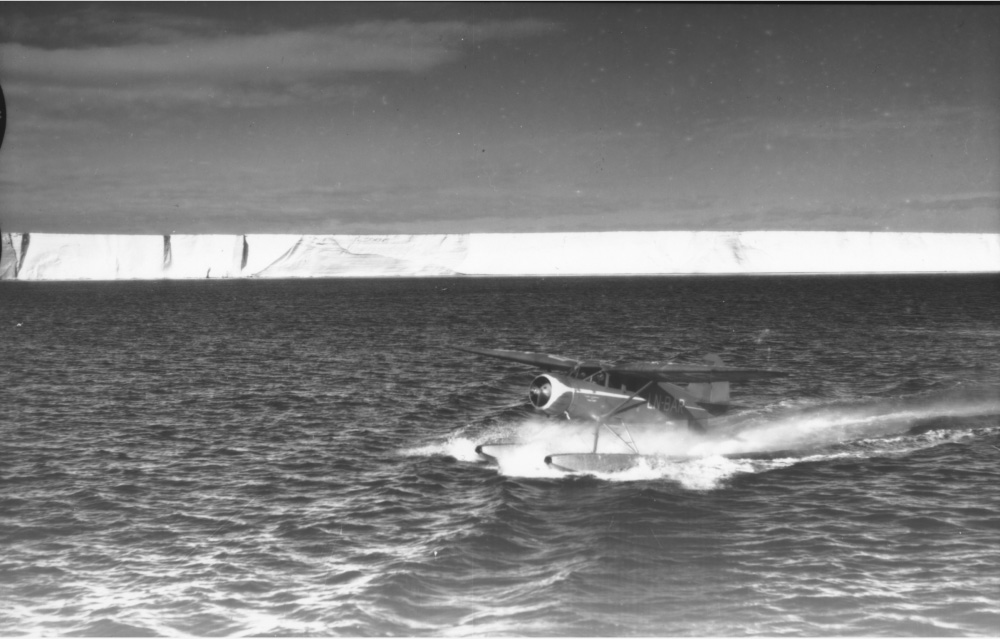
Researchers in Tromsø have uncovered historical aerial photographs of East Antarctica, captured between 1936 and 1937. This archival find from the Norwegian Polar Institute in Tromsø offers a unique dataset that has allowed researchers to visually confirm that glaciers in East Antarctica have not decreased in size; in fact, they have shown slight growth over the past 85 years.
Mads Dømgaard, the lead author of the study from the University of Copenhagen, expressed relief at this stable observation amidst ongoing concerns about climate change and melting ice records. He highlighted the rarity of such long-term stability data for Antarctica, typically reliant on satellite observations dating back only to the 1970s.
Anders Schomacker, a Professor of Quaternary Geology at UiT The Arctic University of Norway, emphasized the significance of these old aerial images, noting that similar studies in the Arctic have documented widespread glacier retreat since the 1930s, contrasting with the findings in East Antarctica.
However, researchers caution against viewing these findings as a sign that climate change concerns are exaggerated. They point out that weakening sea ice conditions may make the glaciers' floating ice tongues more vulnerable to future changes.
Monica Winsborrow, an Associate Professor at UiT The Arctic University of Norway, underscored the interconnectedness of climate processes between the Arctic and Antarctic. She highlighted the accelerated warming in the Arctic due to ocean and atmospheric changes, contrasting it with the more stable conditions in East Antarctica, where the continent's geography limits direct oceanic influence.
Winsborrow warned that despite its current stability, East Antarctica holds the largest volume of ice on Earth. Should climate change accelerate ice thinning and retreat there, the global impacts, including sea level rise, could be profound.
In addressing these challenges, Winsborrow suggested individual actions such as choosing sustainable transportation, reducing energy consumption, minimizing overall consumption, and protecting local environments as ways to mitigate climate impacts in daily life.