Researchers have found that the meltwater from Antarctic ice shelves, intensified by climate change, is affecting a complex network of ocean currents that influences ice melting across the continent.
At Caltech, researchers have utilized data from autonomous underwater vehicles and sensor-equipped seals to map these meltwater pathways in the relatively unexplored Bellingshausen Sea. Their discoveries of new underwater features and currents are helping predict future sea level rise by shedding light on these interconnected processes.
Impact of Climate Change on Antarctic Ice Shelves
Warming due to climate change has accelerated the melting of Antarctic ice shelves. Most of this melting occurs from beneath the shelves due to warm water flowing underneath. This meltwater then spreads around Antarctica's coast through ocean currents, affecting the melting rates of ice shelves further downstream. To predict and understand these effects better, mapping these meltwater pathways is essential.
Andy Thompson from Caltech notes, "We used to view ice shelves as isolated systems, but we've realized that multiple ice shelves are interconnected by currents along Antarctica's coast. Changes in one ice shelf can influence others, so understanding this interconnectedness is crucial for accurate predictions."
Discovering New Meltwater Pathways
Researchers in Thompson's lab have been studying Antarctic seas with various techniques for over a decade. A recent study led by senior research scientist Mar Flexas used data from autonomous underwater vehicles and seals with sensors to uncover a new current carrying meltwater through the Bellingshausen Sea, located on Antarctica's side closest to South America.
Thompson explains, "The Bellingshausen Sea, though not extensively studied, is where warm Atlantic and Pacific waters first reach the ice shelves. As the water melts the ice, it cools and becomes fresher, reducing its melting capacity."
Role of Seal Data in Climate Research
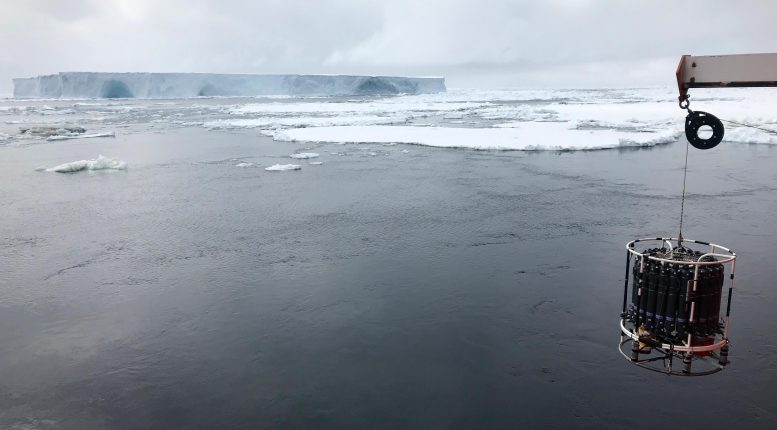
A long-term collaboration called Marine Mammals Exploring the Oceans Pole to Pole (MEOP) involves fitting seals with sensors to measure ocean properties as they travel. This publicly available data, combined with information from undersea ocean gliders, allowed Flexas and her team to gather data on ocean temperature, salinity, oxygen content, and particle concentration in the Bellingshausen and Amundsen seas.
Unveiling Subsea Currents and Troughs
The team identified two distinct meltwater pathways originating from different ice shelves. One pathway follows the coast and can enhance melting at downstream ice shelves by trapping warm water, while the other returns to the open ocean. Seal data revealed a previously unknown seafloor trough, named Seal Trough, which influences current flow similar to how land canyons direct rivers.Research Significance and Future Implications
This research advances our understanding of how melting at individual ice shelves affects Antarctic ice shelf circulation and melting on a continental scale. As ocean temperatures continue to rise due to climate change, understanding these processes near the Antarctic coast is crucial for predicting future global sea level rise.
The study, titled “Pathways of Inter-Basin Exchange from the Bellingshausen Sea to the Amundsen Sea,” is published in *JGR Oceans*.
Reference: “Pathways of Inter-Basin Exchange From the Bellingshausen Sea to the Amundsen Sea” by M. Mar Flexas, Andrew F. Thompson, Megan L. Robertson, Kevin Speer, Peter M. F. Sheehan, and Karen J. Heywood, 02 June 2024, *Journal of Geophysical Research: Oceans*. DOI: 10.1029/2023JC020080
In addition to Flexas and Thompson, the study includes Caltech undergraduate Megan Robertson, Kevin Speer from Florida State University, and Peter Sheehan and Karen Heywood from the University of East Anglia. Funding was provided by the National Science Foundation, NASA, the Internal Research and Technology Development program at JPL-Caltech, and the European Research Council.